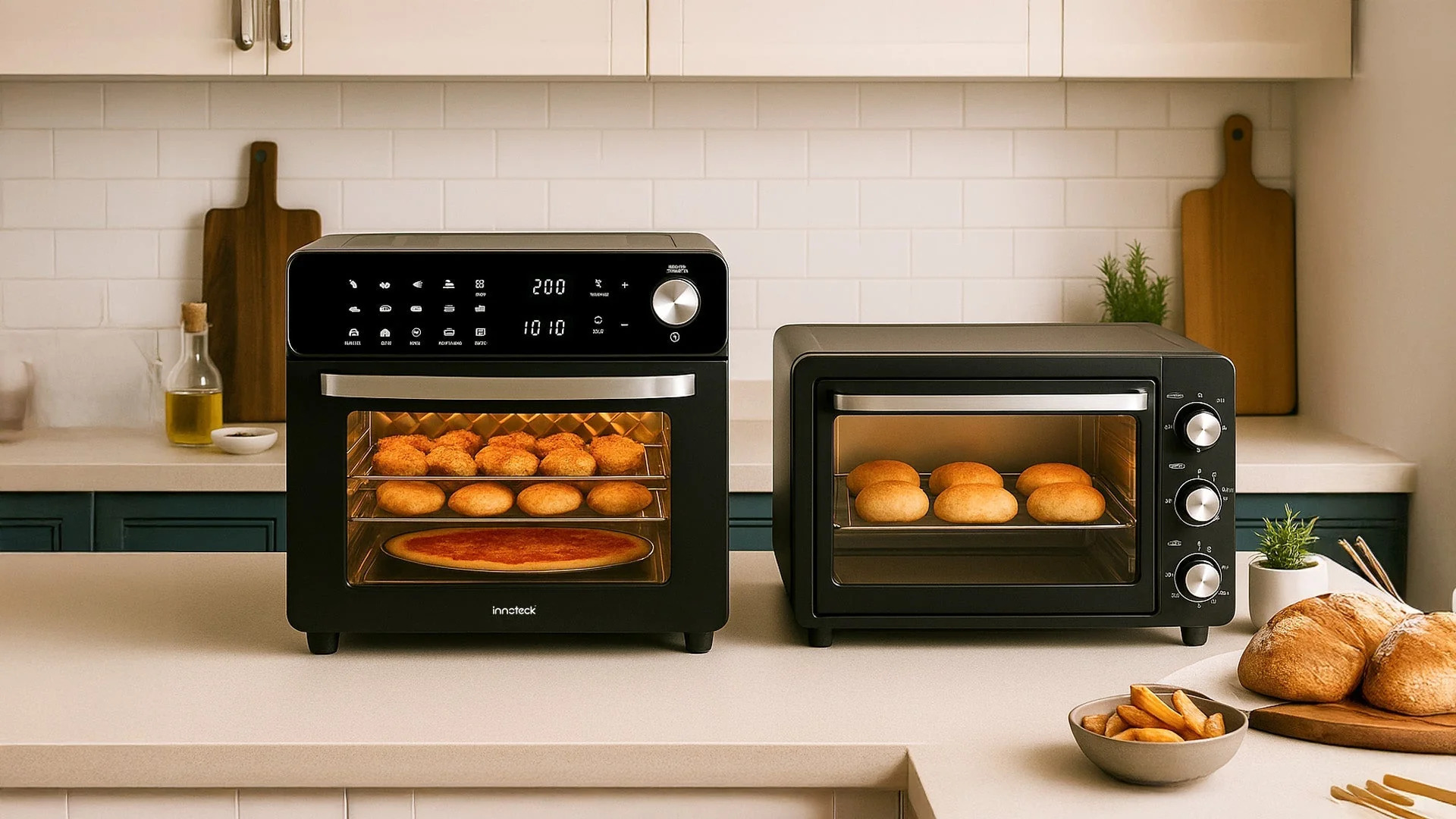
Air Fryer vs Convection Oven: Which Is Better for Your Kitchen?
Choosing a new kitchen appliance isn't always as simple as picking the latest model or the one with the most features. If you've been comparing an air fryer and a convection oven, you've probably noticed that both promise quicker cooking, crispy food, and better efficiency than a conventional oven. Since they use similar cooking technology, many people wonder whether they're essentially the same appliance—or if one is actually a better investment.
The answer depends on your cooking habits, available kitchen space, and the types of meals you prepare most often. While both appliances rely on circulating hot air to cook food evenly, they're built with different purposes in mind. An air fryer is designed for speed, convenience, and smaller portions, whereas a convection oven offers greater flexibility for baking, roasting, and preparing meals for multiple people.
In this detailed comparison, we'll look at how each appliance works, where each one excels, and which option is likely to suit your kitchen best. By the end, you'll have a clear understanding of whether an air fryer, a convection oven, or even both appliances deserve a place in your home.
Understanding How Each Appliance Works
At first glance, an air fryer and a convection oven seem very similar because both cook food by circulating hot air instead of relying solely on radiant heat. However, the size of the cooking chamber and the intensity of airflow make a noticeable difference in cooking performance.
How an Air Fryer Works
An air fryer is essentially a compact countertop appliance equipped with a powerful heating element and a high-speed fan. As hot air circulates rapidly around the food, moisture on the surface evaporates quickly, creating a crisp, golden exterior without requiring large amounts of oil.
Because the cooking chamber is relatively small, the hot air stays close to the food throughout the cooking process. This concentrated airflow is what gives air fryers their reputation for producing crispy fries, chicken wings, vegetables, and frozen snacks in less time than many other cooking methods.
Air fryers are particularly popular among people who want quick meals with minimal preparation and cleanup.
How a Convection Oven Works
A convection oven also uses a fan to distribute heated air throughout the oven cavity. Instead of concentrating airflow around a small basket, it circulates warm air inside a much larger cooking space.
This even distribution of heat helps eliminate hot and cold spots that are common in traditional ovens. As a result, baked goods rise more evenly, roasted meats brown consistently, and multiple trays of food can cook at the same time.
Although convection ovens generally take longer to preheat than air fryers, they offer much greater versatility for a wider range of recipes.
Air Fryer vs. Convection Oven: Key Differences
Before looking at individual features in detail, here's a quick overview of how these appliances compare.
| Feature | Air Fryer | Convection Oven |
|---|---|---|
| Best For | Fast everyday cooking | Baking and family meals |
| Portion Size | Small to medium | Medium to large |
| Cooking Speed | Faster | Moderate |
| Oil Requirement | Very little | Low to moderate |
| Counter Space | Compact | Larger footprint |
| Cleaning | Quick and simple | Requires more effort |
| Baking Ability | Good for basic recipes | Excellent |
| Meal Preparation | One or two dishes | Multiple dishes simultaneously |
Although the comparison may appear straightforward, the right choice depends more on your cooking style than on specifications alone.
Cooking Speed: Which Appliance Saves More Time?
For busy households, cooking speed can be one of the biggest deciding factors.
An air fryer has a clear advantage because its compact cooking chamber heats up rapidly. Many models require little or no preheating, allowing you to start cooking almost immediately.
For example:
- Frozen French fries often cook in about 15 minutes.
- Chicken wings can be ready in around 20 minutes.
- Salmon fillets usually cook in under 15 minutes.
- Vegetables often roast within 10 to 15 minutes.
The smaller cooking space allows hot air to circulate more efficiently, reducing overall cooking time.
A convection oven, while still faster than a conventional oven, typically needs several minutes to preheat before cooking begins. Once heated, it cooks food evenly but generally takes longer because of its larger interior.
If your weekday routine involves preparing dinner after work or making quick lunches, the time savings offered by an air fryer can be significant.
Winner: Air Fryer
Food Texture and Cooking Results
One of the main reasons people buy an air fryer is the crispy finish it creates.
Because hot air moves rapidly around the food, the exterior develops a crunchy texture while the inside remains tender. This makes it ideal for foods such as:
- French fries
- Chicken tenders
- Mozzarella sticks
- Fish fillets
- Roasted vegetables
- Frozen appetizers
Many recipes require only a light spray of cooking oil to achieve excellent browning.
A convection oven also produces attractive browning, but the texture is slightly different. Instead of creating an intensely crisp exterior, it provides more even caramelization across larger dishes.
This makes convection ovens particularly well suited for:
- Roasted chicken
- Turkey
- Beef roasts
- Lasagna
- Pizza
- Sheet-pan dinners
If your goal is recreating the crisp texture of fried foods with less oil, an air fryer usually performs better. However, for roasting meats or preparing larger meals, a convection oven delivers more consistent overall results.
Capacity: How Much Food Can You Cook?
Capacity is another important factor, especially if you cook for more than two people.
Air fryers are available in several sizes, but even larger models have limitations. A typical basket-style air fryer comfortably serves one to four people depending on the recipe.
Cooking multiple servings often means preparing food in separate batches, which can increase total cooking time.
A convection oven, by comparison, provides far more cooking space.
You can easily:
- Roast an entire chicken.
- Bake several trays of cookies.
- Prepare casseroles.
- Cook vegetables and meat at the same time.
- Bake multiple pizzas depending on oven size.
Families, frequent entertainers, and people who meal prep for the week generally benefit from the larger capacity of a convection oven.
For households with only one or two people, however, the extra space may not always be necessary.
Winner: Convection Oven
Energy Efficiency: Which Appliance Costs Less to Run?
Energy efficiency has become increasingly important as electricity prices continue to rise.
Because an air fryer has a smaller cooking chamber, it heats up quickly and usually finishes cooking in less time. This combination often results in lower electricity consumption per meal.
For quick recipes like vegetables, chicken breasts, or frozen snacks, the difference can be noticeable over time.
A convection oven is still more energy-efficient than many conventional ovens because the circulating fan reduces cooking times and improves heat distribution. However, heating a much larger interior naturally requires more electricity than heating a compact air fryer basket.
If you mainly cook smaller meals and want to minimize energy use, an air fryer is generally the more economical option.
Baking Performance: Which One Delivers Better Results?
Although both appliances can bake, they are designed with different strengths in mind.
An air fryer works well for small baking tasks. You can prepare muffins, cookies, brownies, personal pizzas, and even mini cakes if the baking pan fits inside the basket. Since the hot air circulates rapidly, baked items often cook faster than expected, so recipes usually need slight adjustments to prevent overcooking.
A convection oven, on the other hand, is built for serious baking. Its larger cooking chamber allows heat to circulate evenly around cakes, bread, pastries, casseroles, and cookies. You can also bake on multiple racks simultaneously, making it a better choice for preparing larger batches.
If baking is a regular part of your cooking routine, a convection oven offers far greater flexibility and more consistent results.
Winner: Convection Oven
Versatility: Which Appliance Can Do More?
When comparing overall functionality, versatility becomes an important factor.
Modern air fryers have evolved beyond simply "air frying." Many premium models now include additional cooking modes such as:
- Roast
- Bake
- Reheat
- Dehydrate
- Keep Warm
- Grill (on selected models)
Despite these features, cooking space remains the biggest limitation. Preparing multiple dishes at once or cooking for a large family isn't always practical.
Convection ovens are designed to replace several kitchen appliances. Depending on the model, they can:
- Bake cakes and cookies
- Roast meat and vegetables
- Toast bread
- Broil steaks
- Warm leftovers
- Slow cook selected recipes
- Prepare pizzas
- Cook several dishes simultaneously
For households that enjoy experimenting with recipes, a convection oven offers significantly greater cooking flexibility.
Winner: Convection Oven
Cleaning and Maintenance
Nobody enjoys scrubbing kitchen appliances after dinner, so ease of cleaning deserves consideration.
One reason air fryers have become so popular is their simple maintenance. Most baskets and crisper trays feature a non-stick coating and are dishwasher-safe. In many cases, washing the basket with warm water and mild dish soap is enough to keep the appliance clean.
Because food cooks in a compact area, grease splatters are generally contained within the basket.
Convection ovens require more attention. Food residue can build up on racks, trays, and the oven walls over time, especially after roasting meats or baking dishes with cheese and sauces. While some models include self-cleaning functions, routine maintenance still takes longer than cleaning an air fryer.
If convenience is one of your priorities, an air fryer has the advantage.
Winner: Air Fryer
Kitchen Space Requirements
Before purchasing either appliance, consider the available space in your kitchen.
An air fryer is compact enough to fit comfortably on most countertops. Even larger basket-style models occupy relatively little space and can be stored inside a cabinet when not in use.
A countertop convection oven is considerably larger and usually requires a permanent location on the counter. Built-in convection ovens obviously require dedicated kitchen installation.
If you have a smaller apartment, studio, or limited countertop space, an air fryer is much easier to accommodate.
For spacious kitchens where counter space isn't a concern, a convection oven becomes a practical long-term investment.
Price Comparison
Cost varies depending on brand, capacity, and available features.
Air Fryers
Most air fryers fall into these price ranges:
- Entry-level models: $50–$90
- Mid-range models: $100–$180
- Premium smart models: $200–$350
These appliances offer excellent value for people who primarily cook quick everyday meals.
Convection Ovens
Countertop convection ovens generally cost:
- Basic models: $120–$200
- Premium countertop ovens: $250–$500
- Built-in convection ovens: considerably more depending on installation and features.
Although convection ovens require a larger investment, they also replace several other cooking appliances for many households.
Pros and Cons
Air Fryer
Advantages
- Faster cooking times
- Produces crispy food with little oil
- Energy efficient
- Compact design
- Easy to clean
- Ideal for everyday meals
- Affordable compared to many ovens
Disadvantages
- Limited cooking capacity
- Not ideal for large families
- Multiple batches may be required
- Baking space is restricted
Convection Oven
Advantages
- Excellent baking performance
- Large cooking capacity
- Suitable for family meals
- Highly versatile
- Better for roasting meats
- Can cook multiple dishes simultaneously
Disadvantages
- Takes up more kitchen space
- Longer preheating time
- Higher electricity usage
- Requires more cleaning
Which Appliance Should You Choose?
The right appliance depends on your lifestyle rather than simply choosing the one with more features.
Choose an Air Fryer If You:
- Usually cook for one to three people.
- Want meals ready as quickly as possible.
- Enjoy crispy foods without deep frying.
- Have limited kitchen space.
- Prefer an appliance that's easy to clean.
- Frequently cook frozen foods or quick dinners.
Choose a Convection Oven If You:
- Cook for a family regularly.
- Bake bread, cakes, or cookies.
- Roast whole chickens or large cuts of meat.
- Like preparing several dishes at once.
- Meal prep for the week.
- Need one appliance for almost every cooking task.
Can You Use Both Together?
Many home cooks discover that these appliances complement each other rather than compete.
For example, you can roast a chicken in a convection oven while preparing crispy vegetables or fries in the air fryer. During holidays or family gatherings, using both appliances allows you to prepare meals more efficiently without overcrowding a single oven.
If your kitchen has enough space and your budget allows, owning both appliances provides the greatest flexibility.
Frequently Asked Questions
Is an air fryer healthier than a convection oven?
Both appliances support healthier cooking because they require much less oil than traditional deep frying. Air fryers are especially effective at creating crispy textures with only a small amount of oil.
Can an air fryer replace a convection oven?
It can replace many everyday cooking tasks for individuals and couples. However, if you bake regularly or prepare meals for several people, a convection oven remains the better all-purpose appliance.
Which appliance cooks food faster?
In most situations, an air fryer cooks food more quickly because of its compact cooking chamber and powerful airflow.
Which one uses less electricity?
An air fryer generally consumes less energy since it heats up faster and cooks smaller portions in less time.
Is a convection oven worth buying?
Yes, especially for families, baking enthusiasts, and anyone who frequently prepares larger meals. Its versatility makes it one of the most useful appliances in a modern kitchen.
Final Verdict
When comparing an air fryer and a convection oven, there isn't a universal winner because each appliance excels in different situations.
If your priority is preparing quick, crispy meals with minimal oil while saving time and energy, an air fryer is an excellent choice. Its compact design, fast cooking performance, and simple cleanup make it perfect for busy individuals, couples, and smaller households.
A convection oven, however, is the better option for anyone who enjoys baking, roasting, meal prepping, or cooking for a family. The larger cooking capacity and greater versatility allow it to handle everything from cookies and casseroles to whole chickens and holiday dinners with ease.
Ultimately, your decision should be based on how you cook most often rather than which appliance has more features. For quick weekday meals, an air fryer is hard to beat. For larger recipes and all-around kitchen performance, a convection oven remains the more versatile choice.
Whichever appliance you choose, both can help you prepare delicious meals more efficiently while reducing cooking time and improving overall convenience in the kitchen